- 11 e-bikes checked against UK law 9 confirmed road legal. The rest say why not
- 12 pieces of kit covered Helmets, clothing, parts and accessories, each with its drawbacks stated
- Independent Not owned by a brand or retailer. Funded by Amazon affiliate links
- Last updated 22 October 2026 Listings are revisited as prices and specs change
Brands
Electric Bikes UK
Welcome to Electric Bike Insight — your independent guide to electric bikes and e-bike accessories available in the UK. Whether you're looking for a lightweight commuter e-bike, a powerful off-road model, or affordable conversion kits to electrify your existing bicycle, we've curated a catalogue of options to help you find the right fit for your budget and lifestyle.
Every product listed links directly to Amazon UK so you can check live pricing, read customer reviews, and buy with confidence. Use the filters on the left to browse by category — from complete e-bikes and helmets to components, accessories, and conversion kits — or sort by price to find options within your range.
Electric bikes have become one of the fastest-growing segments in UK cycling. With rising fuel costs and improved battery technology, a quality e-bike can pay for itself quickly for commuters and leisure riders alike. Browse our full range below to compare models side by side.



Electric bikes in the UK: what to know before you buy
Electric bikes (also called e-bikes or EAPCs, Electrically Assisted Pedal Cycles) have transformed how people commute, ride for leisure, and tackle hills across Britain. The combination of a small motor, a rechargeable battery, and pedal assist takes the strain out of longer journeys without removing the fun of riding. Whether you live in a flat city centre or somewhere with steep lanes, an e-bike can replace a surprising number of short car trips and bring cycling back into reach for riders who'd given it up.
UK e-bike law: the 250W and 15.5mph rules
To ride an e-bike on UK roads, cycle paths and bridleways without registration, tax or insurance, it must meet the EAPC rules. The motor's continuous rated power must not exceed 250W, and the motor must stop assisting once you reach 15.5mph (25km/h). Below that speed, the motor only kicks in while you're pedalling — twist-and-go throttles fitted after January 2016 require type approval. You must be at least 14 years old to ride one, but you don't need a licence and a helmet isn't a legal requirement (though we strongly recommend one). Any e-bike that exceeds the 250W or 15.5mph limits is classed as a motor vehicle and needs registration, insurance, tax and an appropriate licence — these are sometimes called "speed pedelecs" or s-pedelecs and aren't legal on regular UK cycle paths.
Choosing the right category
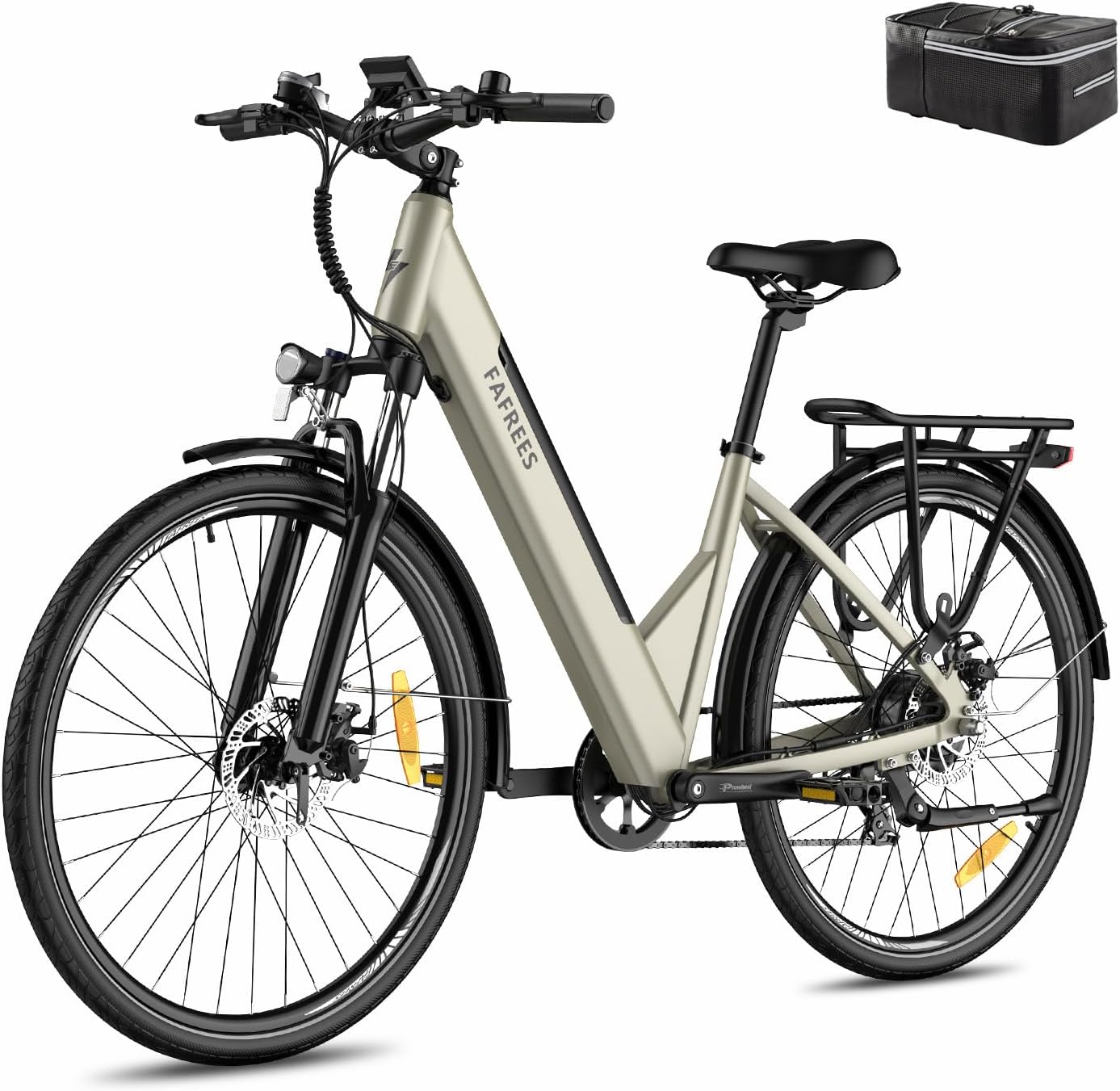
Commuter e-bikes are the most popular category: usually fitted with mudguards, lights, a rear rack and puncture-resistant tyres, they're built for daily mileage on tarmac. Look for a battery range of at least 30–40 miles if your round trip exceeds 10 miles, and a hub or mid-drive motor with enough torque to handle hills loaded with shopping or a pannier.
Folding e-bikes suit train commuters and anyone short on storage space. They sacrifice some range and comfort compared with full-size frames, but modern folders like the Brompton Electric and MiRider GB1 have made huge strides in ride quality.
Electric mountain bikes (eMTBs) open up off-road routes that would normally take hours to climb. Mid-drive motors from Bosch, Shimano and Yamaha dominate here for their natural feel and centred weight.
Conversion kits let you electrify a bike you already own. Front-wheel kits are the easiest to fit, rear-wheel kits offer better traction, and mid-drive kits give the best ride feel at higher cost. They're a great way to keep a frame you love or stretch a tight budget.
Accessories and components — from helmets and locks to spare batteries, chargers and lights — make the difference between a bike you ride occasionally and one you rely on daily. A good lock and decent lights are not optional purchases.
What to look for when comparing models
Battery capacity is measured in watt-hours (Wh) — multiply voltage by amp-hours to get the figure. A 400Wh battery typically returns 25–40 miles depending on rider weight, terrain and assist level; 500Wh and above is worth paying for if you ride more than 10 miles at a time. Motor placement matters too: hub motors are cheaper and quieter, while mid-drive motors deliver better hill performance and a more natural ride. Don't overlook the basics: frame size, brake type (hydraulic disc brakes are worth the upgrade), and whether the battery is removable for indoor charging if you don't have a garage.
Frequently asked questions
Do I need insurance for an e-bike in the UK?
No — as long as your bike meets the EAPC rules (250W motor, 15.5mph assist cut-off), it's treated as a regular bicycle and you don't need insurance, tax or a licence. That said, dedicated e-bike insurance against theft is worth considering given the typical purchase price.
How long do e-bike batteries last?
A quality lithium-ion battery should hold useful capacity for 500–1,000 full charge cycles, which usually equates to three to five years of regular riding. Storing the battery at around 60% charge in cool conditions extends its life considerably.
Can I ride an e-bike in the rain?
Yes. Reputable e-bikes are rated IPX4 or higher, meaning they cope fine with rain and puddles. Avoid jet-washing the motor and battery directly, and dry the contacts if the bike has been soaked.
Are cheap e-bikes from Amazon any good?
Quality varies widely. Budget e-bikes under £700 often cut corners on battery cells, brakes and frame quality. We focus on listings with strong customer feedback and recognised brands. Always check that any bike you buy is sold as EAPC-compliant for UK use.
Where can I ride an e-bike?
Anywhere a regular bicycle can go — roads, cycle paths, bridleways and most off-road trails open to bikes. E-bikes are not permitted on footpaths or pavements unless the path is shared-use.