Best Commuter Electric Bikes UK 2026
The best commuter electric bikes in the UK for daily riders — lightweight, reliable, and designed for city streets and cycle paths.
This guide is only about riding to work. For the spec basics (motor position, battery watt-hours, the legal test) see our guide to choosing an electric bike, and for picks across every kind of rider see the best electric bikes in the UK. For commutes of roughly 5 to 20 miles each way, an e-bike is usually quicker than the bus, far cheaper than driving, and gets you in without arriving soaked in sweat.
What a Commuter E-Bike Needs That Others Don't
- Integrated lights powered by the main battery, so they are never flat. Half the UK commuting year is ridden in the dark at one end of the day or the other.
- Full mudguards. Non-negotiable if you are arriving at an office. Many mountain-style e-bikes ship without them, so check before buying.
- A rear rack or pannier mounts. A laptop in a pannier is far more comfortable than a backpack over any real distance.
- A step-through or low-step frame if you ride in work clothes.
- A belt drive or enclosed chain, which keeps grease off your trousers and needs almost no maintenance.
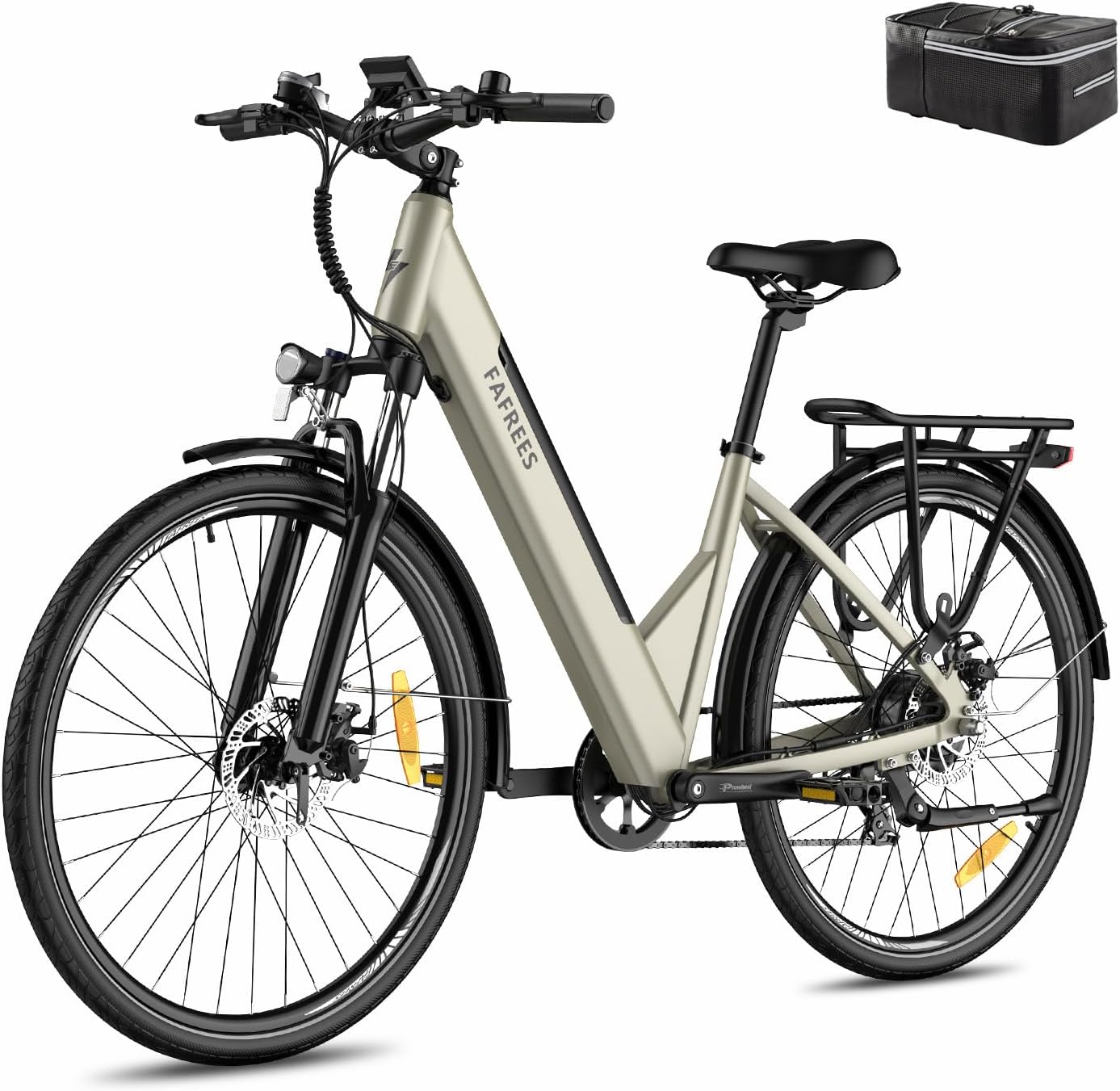
Of the bikes we list, the HITWAY BK7S PRO comes with lights and a rack fitted, the Fafrees F28 PRO is the step-through, and the ADO Air20S is the belt-drive folder.
Range for a Round Trip, Not a Brochure
Size the battery for your return journey on the worst day of the year: cold, into a headwind, on a higher assist setting because you are late. That usually means about half the quoted range. For a 10-mile round trip a 400 to 500Wh battery will do two or three days between charges in winter. If you can charge at work, a smaller, lighter battery is fine.
Folding Bikes and the Train
If your commute includes a train, a folding e-bike is usually the only practical option. Most UK operators carry folded bikes free at any time, while full-size bikes are often banned at peak times or need a reservation. Check your operator's rules before you buy, and remember you may be carrying it up station stairs, so weight matters as much as the fold.
Cycle to Work: Pay Less for the Bike
If your employer runs a Cycle to Work scheme, the bike is paid for through salary sacrifice, so you save the income tax and National Insurance on its cost. For a basic-rate taxpayer that is roughly a quarter off the price, and more for higher-rate taxpayers. Many schemes now go well above the old £1,000 limit, which puts most e-bikes in reach, but the ceiling depends on your employer's scheme.
Running Costs
A full charge of a 500Wh battery costs roughly 10 to 15p at current electricity prices, so a daily commute costs a few pounds a month in power. Set aside around £100 to £150 a year for tyres, brake pads and a service. Against a rail season ticket, or fuel and parking, most commuters recover the cost of the bike within one to two years.
Parking It at Both Ends
E-bikes are prime theft targets, and a bike parked in the same place every weekday is an easy one to watch. Use a Sold Secure Gold D-lock through the frame and rear wheel, take the battery inside with you, and ask whether work has a locked bike store. Register the frame on BikeRegister, and check whether your home insurance covers the bike away from the house. Most policies do not without a named-item addition.
Shop Commuter E-Bikes